March 31, 2012

How to Build a Cat Tree

All in all this cost about $100 but the vast majority of that was for the sisal rope, which is optional. It took much more rope than I thought it would. I think I used about 350 ft of rope or something.

Here is the finished product.


First, wood. I got 2 pieces for platforms that were each 2'x2'. Plywood is ok, but I strongly recommend solid wood if you want it to last. Make sure it is at least 1/2" thick. I wish I'd used solid wood. You can decide what shape you want each platform to be. I wanted mine to fit nicely in a corner and have a stair-step pattern, so the bottom platform I cut out a 1'x1' square. For the second platform, I cut the other piece in half. Then the top part is the 1'x1' square that was cut out of the bottom platform. I seriously considered making the bottom part basically closed in between the bottom legs, with wood blocking most of the sides so they would have a little cave at the bottom. If I ever make another cat tree I'll try it that way.

For the legs, I used 2"x4" boards. Or actually, they might have been wall studs. Make them whatever height you want. For mine, the bottom legs are 1' tall. The long ones are 2' tall, and supporting the top platform are also 1'.

I built it from the bottom up. USE SCREWS to put the legs on. I used nails first. It pulled apart way too easily so I had to pull the nails and redo it with screws. For the tall legs, they were not completely flush against the corner of the bottom and top platforms, they are inward and inch and 1/2 or so. This was because the bottom legs were already nailed in at the corner.


Notice the little wedges in the corners of the tall legs. This is for added support. Your cats will likely be running full speed and jumping onto the cat tree sometimes. Support is important for safety! I simply cut piece diagonally and screwed them in.


Be careful when attaching wedges! This one broke in the corner after I'd already pounded in 2 nails. Doh! It stayed that way, because it was getting wrapped with rope.


Next, rope! Do this BEFORE CARPET so you don't get glue on the carpet. "Sisal" is the kind of rope you find on cat trees, so that's what I got. I used Gorilla Glue because it adheres to wood, and it EXPANDS when it dries- thus expanding deep into the fibers of the rope. WEAR GLOVES!!! I got a pack of latex gloves, so I wouldn't care that they got all gluey.

Ok, so I put a notecard down on the cement under the bottom legs. This was to prevent the cat tree from getting glue to the cement. I would put a fat squiggle of glue around all 4 sides of the leg, then smear it into an even coat using another notecard. This worked great! I would only put glue on about 6" sections at a time so it wouldn't start to dry before I got the rope around it. I found it easiest to start at the BOTTOM of the leg and work my way up. I would put the tail of the rope about 3" up on the leg, vertically, with the rest of the rope dangling below it (so the cut off end is facing upward). I would hold the end there, then start wrapping from the bottom. Basically the end of the rope is tucked up under the wrap. You don't want this:

because then you have a loose end to be pulled. You want that end tucked under the wrap. I hope that makes sense...

Anyway, pull the rope as TIGHT as you can as you go. After going around the leg 3-5 times, I would also push the rope down. This made it very tight and eliminated any gaps. I made the cat tree in the summer of '09 and the rope is still tight as of now, almost 3 years later.


Ok, so you wind your way up to the top of the leg, as tight as you can and pushing it down so it's tight. Now cut the rope. You'll need to sit there, firmly pressing the loose end against the leg until it dries. Or, get a clamp. I chose to sit there and hold it for about 30 mins each time. Ugh. It takes quite a while to completely dry. If you find that an end didn't stick, just re-glue it. The same thing applies if you're partway up a leg and come to the end of the rope, only in this case what you should do is stick the end of the rope up, vertically, and then start the next piece of rope wrapping around it. Hide those loose ends wherever you can! This also means there won't be any gaps between rope sections.

Here is a finished leg


Now, wrapping the taller legs is just the same. Except those pesky wedges! How do you deal with those?? It's no different, except I found it easier to start at the TOP and wrap downward. Remember to push the rope UP to keep it tight.

First try.. lots of uncovered space on that wedge!


This one, much better. Also see how the end of the rope is wrapped around the leg? That's to help me hold it tight while it dries. Once it was dry I cut it. Again notice the improper use of nails (use screws!!) and also note how the leg is not against the edge of the platform, it's in about an inch and 1/2 or so as the nails going into the bottom leg are against the edge.


Wrapping progress


Last step, carpet!! I got FREE carpet. I lived in an apartment complex and the unit below mine was being re-carpeted. I asked if they had any scraps. I got a huge roll. Flip the carpet UPSIDEDOWN. Measure out the area of your platforms using a tape measure. **Give yourself about 2 inches extra on each side!!!** That way you can wrap it around the edges. I used a Sharpie to draw my lines on the back of the carpet. Carpet has this neat little grid on the back, which makes it easy to make straight cuts. I used a basic box cutter to cut it which worked great.

Now how do we fit it around those pesky wedges?


I cut out the the L-shaped piece of carpet for the bottom platform and fit it on the platform. I used a staple gun to tack it in place over the main area, not getting too close to the wedges yet. When stapling, hold the fibers apart if you can to get the staple all the way down. This held it in position so I could do the cutouts for the wedges. Carpet cuts very easily. It wasn't difficult to cut along the wedges and basically trace them out with the box cutter.

On the middle level, there is that leg from the top platform right smack in the middle. How do we get the carpet around that? You could try to poke out a hole but I chose to make a straight cut up the middle of the carpet to the leg. Again I cut the carpet away from the leg so it fit perfectly. I put several staples along the slice to hold it together. You can't see a seam at all.


Wrap the carpet over the edges and staple on the sides or underneath. You will have to cut little pieces out to wrap the carpet over corners.

Tada!! You're done!

Here is the cat tree as of today, March 31st, 2012. You can see a loose end sticking out on one of the tall legs, and the rope is well scratched, but it's held together beautifully. The rope on the top platform is the extra rope. It's not glued on.

March 28, 2012

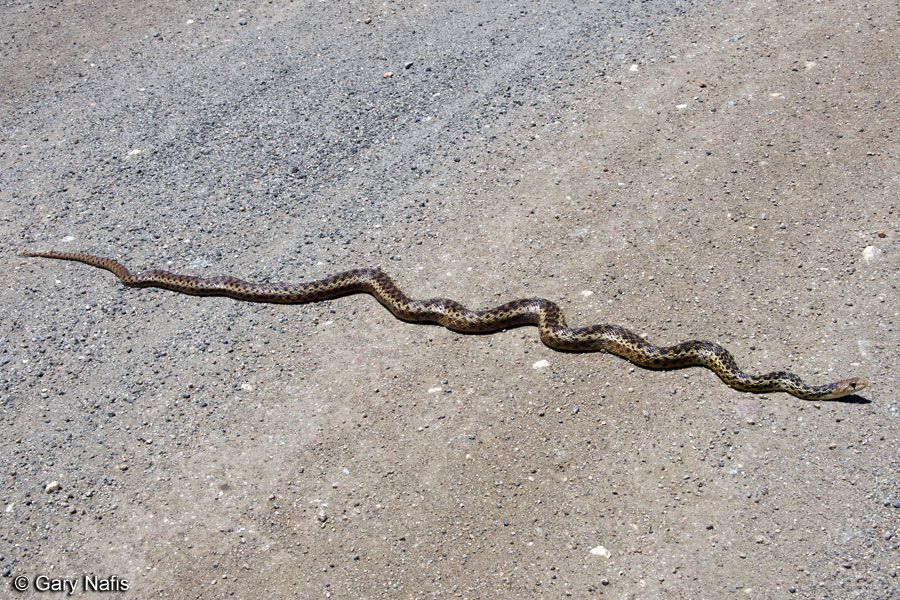
Snake!

I've lived in San Diego for 2 and 1/2 years and today was the first time I saw a snake. The area is known to have rattlesnakes so I've always been cautious.

We were biking to the dog park and right before we arrive there is a sharp 180* turn that is also very steep. I was pedaling hard as usual and the dogs were getting very excited to be at the park. Halfway around the corner I saw a very long snake. I shouted "WOAH!!" and slammed the brakes, barely missing the snake. I have no idea how I stopped in time. The dogs ran right by it without even noticing it, and even once stopped they continued trying to go forward since we were so close to the park. I immediately looked at the tail and was relieved to see the lack of a rattle. Thank goodness for that! I dismounted to snap a couple pics with my cell phone.

Despite having been almost run over, and Denali most definitely stepped over it, it just laid there. I considered for a moment that it may have been dead. After getting a couple pictures I gently pushed my foot against its tail to see if it was alive. It slithered forward a couple inches. Ok, alive. I prodded it again to get it off the trail. Another couple inches. Not working. I kicked a little dirt at it and it bolted into the brush. Live long and prosper, Mister (or Miss) snake!


My feet are women's size 9-10 for reference, so I guess the snake was about 5 feet long. Right behind my leg is my bike which is leaning against the fence, and the snake's nose is less than a foot away from the fence on that side. It's almost the entire width of the path!


After getting home I looked up California snake species I think it's a San Diego gopher snake. If anyone has a better guess let me know!

Click to enlarge
www.californiaherps.com

Click to enlarge
www.californiaherps.com

March 26, 2012

Pics and Vids of Raw Feeding

I want to give a warning first that there will be graphic images and videos, as that's the whole point of this post. If watching lions eat gazelle on the Discovery channel makes you nauseous you might not want to continue. When first starting raw feeding it was a little odd to just set down a big chunk of meat for my dog to chew on and eat. It's such a drastic difference from dime-sized pieces of dry kibble. It was really good for me to join groups and see images of dogs digging into big chunks of meat and I want to pass that on. The most common things I currently feed are chicken (mainly leg quarters or whole chickens), turkey necks, pork roasts, beef heart, and whole sardines. For organ it's beef or chicken liver and beef kidney. They also get an egg about twice a week. I feed whatever else I can get to add to those staple foods.

To dive right in, one of the most common things I feed is chicken leg quarters. They are cheap and a good source of edible bone.


Here is Denali eating a chunk of llama neck. I fed her an entire half of a llama including half of every organ.


Here is bag of llama stomach, or as my awesome sister-in-law labeled it, Llama Tummy & Poop! Stomach is fed as meat, not organ. This was quite smelly as it has semi-digested grass and hay in it. It smells like manure to be blunt. The dogs loved it. I left it up to them if they wanted to eat the grass and hay or pick it out. They ate it all.


Here is a leg of the llama. Leg bones of large animals are very, very hard and dense and are known to damage or break teeth. Denali was not allowed to gnaw on the bone. She stripped the tendons and the little bit of meat off, ate the foot, then I threw away the bones.


Introduction of beef kidney. Introduce organs in tiny pieces. I was curious if she would eat it or not, but nope! You can tell she is not impressed as her lip is curled up. She would not eat it thawed at first so I cut it into smaller pieces and fed it semi-frozen.


Beef tongue and beef heart frozen together. For my dogs, the portion size for each day is around 14 oz. Almost one pound (16 oz). So when I get something like, say, a beef heart, that is 2.9 lbs (46.4 oz), I cut it into pieces that are about 14 oz each. That gives me 3 meals, plus about an extra 1/3 of a meal. What do I do what that little bit? I put it with other little bits. Feeding it to smaller other pets like cats or ferrets is also an option.


Beef ribs! Feeding on the kitchen floor is not ideal for me. I usually feed on a tarp or outside but we had recently moved and I threw out the old tarp, and outside was not dog proof yet. I also don't like feeding on hard floors because the dogs slip and slide and it's really awkward for them to eat. When they are done I clean the floors so at least I get clean floors out of it! They always make a bloody mess all over their legs when eating ribs so they go straight into the bathtub after eating.


Whole wild bunny. I froze it for a few weeks to kill any parasites then let her eat it. The only part of the entire rabbit that she did not eat was the stomach.


Pork roasts (shoulder, arm, picnic, butt, shoulder blade roast). I often cut them into meal-sized portions but sometimes will let the dogs eat off the whole thing.


Whole chicken. I tried it first with feathers on. Denali plucked hers and spit out the feathers. Kaytu ate the feathers and then threw them up. I decided the mess of both wasn't worth it, so I now skin chickens when I get them whole with feathers. Skinning them is easier, faster, and less messy than plucking. I skin them when they are mostly thawed as it's nearly impossible to skin it while frozen, and when totally thawed it's more slimy and icky.


Video of Denali eating a whole store-bought chicken.


Kaytu eating an egg. She breaks it open by dragging it along the ground with her paw.


When Kaytu was first offered raw chicken her first day with us she didn't want to eat it. One way to help hesitant dogs is to cut the meat into smaller pieces and spread them out a little on a plate, cutting board, baking sheet, or other surface. Here is some cut up chicken, I think from a leg quarter and breast.


**Updated 3/28/2012**

I took a few more pictures last night.

Packages of "Chicken Hearts and Gizzards" have been great for the cats. As noted on the packaging, they are usually mostly gizzards.


However, I noticed there seemed to be a whole lot of hearts in the packages which is why I grabbed them, as I originally wasn't planning on it that shopping trip. I can't resist when meat looks extra good or is on sale.


I find chicken liver in these containers.


Beef kidney.

Inside of a kidney. All the white is normal, it is quite hard.
It's common to have hard white spots on the outer part as well.
Outside of a kidney
**Updated 4/12/2012**
A few more

Pork Tails! I had never seen them so thought I'd give them a try.
They are of course mostly bone, so will be fed when a meaty meal is also fed.
Beef heart
Beef heart inside
Beef heart outside
Beef heart
It is also common for there to be white "stringy" bits of connective tissue. Don't worry, it's not worms or anything bad!
**Updated 5/23/12**
Pork roast, Boston Blade. Also called Boston Butt. It's the shoulderblade and surrounding meat.
Pork arm roast

**Updated 8/7/12**

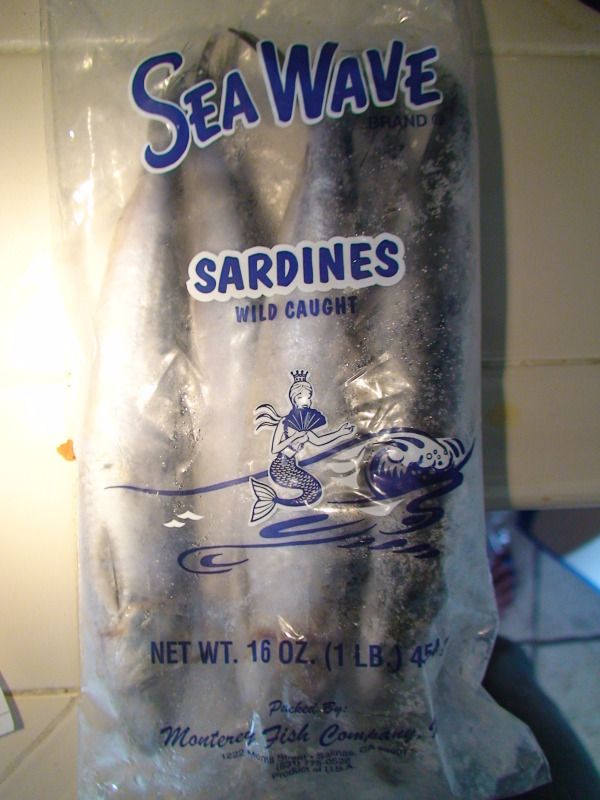
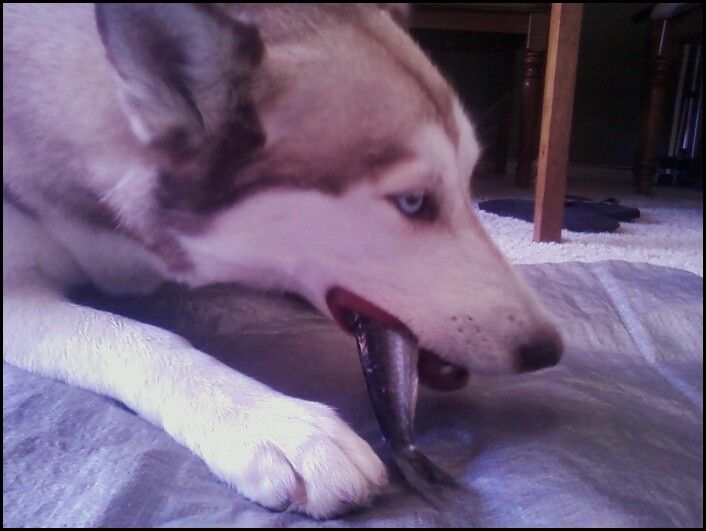
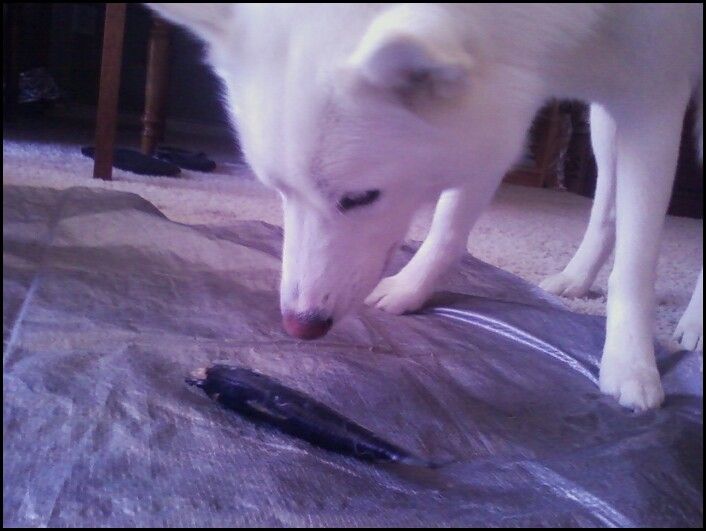
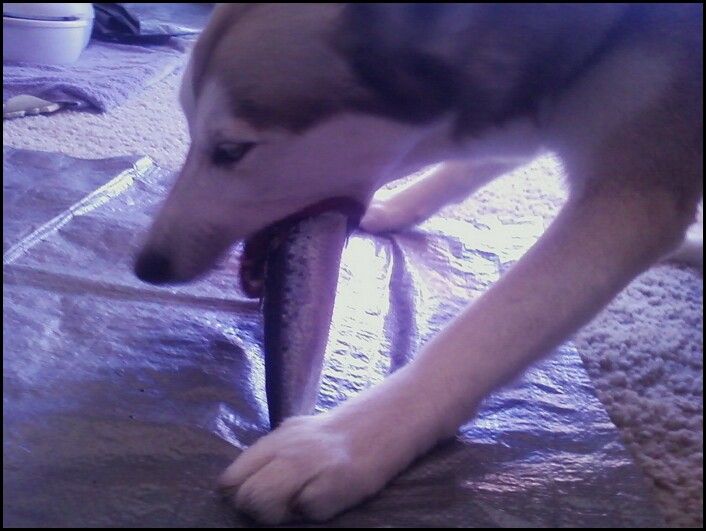
Whole sardines

*Use of paws optional.

March 16, 2012

Bikes and Eggs

The girls are really enjoying our bike rides to and from the park. Kaytu runs so much faster that I have to brake almost the entire time so Denali can keep up and stay in front. I'm sure Kaytu appreciates our separate bike rides where she can run as fast as she wants. Hopefully I can also put the neckline on soon to keep them side-by-side. When I've previously tried it Denali refuses to move, which means Kaytu has to try to pull her, which makes Denali plant her feet even harder. Stubborn girl! I'm also trying to encourage Denali to actually pull, as I'm still having to use the flexi-lead.

Typically my view behind them looks about like this.


Denali on the left, Kaytu on the right.

I attached a GorillaPod to the handlebars yesterday to record our journey to the dog park. It's 1.5 miles. The camera ran out of recording space at about 1.4 miles. It's a long video, but the fastest running is in the beginning for about 3 minutes until we get to the intersection, and then at 7:00 when we hit the dirt trail.


On the way home the bike, named Dani, had a bit of a problem. Fortunately we were only 4 houses away so I didn't have far to walk. I experienced a little bit of chain suck. By a little bit, I mean a lot, and it's jammed so bad I can't get it undone. I'll have to take it apart. I also need new pedals, brakes, and a general tune up. I'll be busy giving her some much needed attention.


In other news, Kaytu broke her first egg today all by herself! Typically I jam the blunt end of a fork through it to get her started but today I wanted to see if she could do it herself. I've been feeding them outside since the weather has been really nice. She decided that using her paws to drag the egg across sharp stones was the way to do it. Every dog figures out their own unique way. Some dogs drop them on the ground, some chomp down into them, some nibble an end until it breaks, some stomp on it with their paw.


Kaytu


March 1, 2012

Kibble Breakdown: Source of Protein

The main reason I don't have trust in kibble companies is because there is no way to know for sure exactly what is going into the kibble. For example, the label may say "bone meal." Bone from what animal? Was it a diseased cow? Was it someone's pet dog? Both are legal to put into pet food.

Back up to the invention of pet food. It can be hard to believe that pet food has only been around about 50 years but it's important to look at the roots and how it's evolved. Here is a quick history lesson from Sojos.

"It wasn’t until the early 1900’s that pet food really caught on. Canned horse meat was introduced in the United States under the Ken-L-Ration brand after WWI as a means to dispose of deceased horses. The 1930’s saw the introduction of canned cat food and dry meat-meal dog food by the Gaines Food Co. During WWII metal used for cans was set aside for the war effort, which nearly ruined the canned pet food industry. But by the time WWII ended, pet food was off and running again, and sales had reached $200 million. For companies such as Nabisco, Quaker Oats, and General Foods, pet food represented an opportunity to market by-products as a profitable source of income. The number one benefit was convenience, and with the economy booming, people could now afford the luxury of pet food. At first, canned pet food was the primary type sold, but by 1956 the first extruded pet foods were hitting store shelves. Extrusion is the process by which pet foods are formed into pellets, and then sprayed with synthetic nutrients to compensate for nutrition lost during processing."
Even the start wasn't so great. Deceased horses and byproducts. One can assume these horses were old, diseased, injured, or simply not needed anymore. A valid argument can be made that wild canids, like wolves, often kill and eat the animals that are old, diseased, sick, injured, or already dead and rotting. This is true. They do just fine eating those animals. They can handle the bacteria. Wolves will even kill each other and cannibalize each other so why fuss about feeding dogs to dogs? Why the fuss about the quality or source of the meat?

The health of your pet is directly affected by what they eat, therefore I want to know exactly what my pets are eating. A sick old wild elk being eaten is different than a dog which was euthanized and those chemicals are then going into the pet food. As mentioned it is legal to use dead pets as a source of protein in pet food. Don't believe me? I don't blame you. It took me a while to grasp the idea that companies would actually do that. It doesn't seem possible that a beloved family pet could be turned into food for other pets but it it's true. Some sources that verify this is not only legal but it actually does happen:

1. Video- Former AAFCO President Admits Pet Food May Contain Pets
2. EPA document, saying "Independent [rendering] plants obtain animal by-product materials, including grease, blood, feathers, offal, and entire animal carcasses, from the following sources: butcher shops, supermarkets, restaurants... and animal shelters."- Emissions Factors and Policy Applications Center, Chapter 9: Food and Agricultural Industries, Section 9.5 Introduction to Animal & Meat Products Preparation
3. An FDA study on pet foods testing for the presence of pentobarbital, the chemical used to euthanize pets- Dog Food Survey Results

Please note that the last study about pentobarbital was conducted in 1998 so may be out of date. Regardless, pentobarbital was confirmed in several brands of dog food including Purina ProPlan and Ol'Roy. From my understanding, pentobarbital is broken down and wouldn't be able to be tested for when it reaches a certain temperature, so pet foods processed at higher temperatures may still contain dead pets.

How do companies get away with it? Why don't people know? In the pentobarbital study, the rendered ingredients tested were animal digest, animal fat, beef and bone meal, beef tallow, and meat and bone meal. Beef tallow (aka beef fat) and beef and bone meal are the only ones that are a named source. It says beef; it's beef product. The others, well, who knows what that's from? Exactly. That's how pets end up in pet food. Who would buy a food that said dog fat or cat digest? Companies get away with it by not naming the source, such as "meat and bone meal."

I would never, ever feed a product that had unnamed sources. You don't know what it is or where it came from.

By-products are also something to me wary of. Let's take poultry byproduct meal for example. The AAFCO definition is "Consists of the ground, rendered, clean parts of the carcasses of slaughtered poultry, such as necks, feet, undeveloped eggs, and intestines, exclusive of feathers except in such amounts as might occur unavoidably in good processing practices." In other words, no meat. Clean carcasses. While byproduct itself is not something to really by wary of, do understand that it is not providing a significant amount of protein, if any. The necks do have a little meat but it's not much. I feed feet and heads to my pets but as part of a balanced diet that mainly consists of meat.  Byproduct as a sole animal source is not acceptable. Dogs need a diet consisting of animal-based protein. Byproduct is not enough.

An animal "meal" is again something to use caution with. The quality cuts of the animal have typically been removed and "meal" is made of the leftover bits, including bone.

Especially avoid fish meal as "According to US Coast Guard regulations, all fish meal not destined for human consumption must be conserved with Ethoxyquin (unless the manufacturer has a special permit). This preservative is banned from use in foods for human consumption except for the use of very small quantities as a color preservative for spices. So unless the manufacturer either presents a permit or states "human grade" fish or fish meal is used, you can be pretty sure Ethoxyquin is present in the food even if it is not listed." Ethoxyquin is considered a hazardous chemical under the criteria of the OSHA Hazard Communication standards. Hill's Science Diet and Eukanuba are known users of ethoxyquin. There is also a nice loophole in labeling. Manufacturers of pet food only need to list the ingredients which they add. In other words, if the fish already has ethoxyquinin it when they buy it then it doesn't need to be listed on the label. Another reason to avoid fish meal is simply because you have no idea what kind of fish is in it or where the fish came from.

Really, I just like to know what meat I'm feeding my pets and the best way I know how to do that is to get meat that was intended for human consumption, or get wild game. I will feed them scraps and leftovers and bones. I have fed a wild rabbit that Denali happened to catch and kill. I would feed fresh roadkill depending on species and condition- heck I'd love to get a fresh deer! I feed my pets meat that is freezer burned. The dogs get meat that is a little ripe. Dogs can bury a chunk of meat in the backyard for a week in summer then dig it up and eat it and suffer no ill consequences. There is a lot of hype about what not to feed and what to watch out for in pet food. Dogs can handle some pretty gross stuff but I am not willing to guess about where it came from and what chemicals are in it. If it's not good enough to be put in the meat section at the grocery store (or hunted and eaten), I don't want them eating it.

There are good kibble manufacturers and ones that I do trust and recommend. While it can be difficult to know with 100% certainty what goes into the kibble I do believe that some companies have their heads and hearts in the right place and do want to provide a quality product. It's worth your time to research each and every ingredient on the label to see what's in it, what it's for, what it does, and side effects or concerns. It's worth your time to do some research into the parent company of the manufacturer. It's worth your time to research pet food recalls to see which manufacturers have a good reputation. It's worth your time to keep track of the ingredients in the specific food you feed and notice when the formula changes. It's worth your time to notice when the manufacturer is bought out and changes may occur. It's worth your time to find and feed a quality food that keeps your pet as healthy as possible.