August 10, 2012

Dog Parks, Pt. 2

[Part 1 here]

10.Unaltered Dogs
I don't know of any dog park anywhere that allows females in heat to enter. Unspayed females are permitted but should not be brought when in heat. The heat cycle lasts about 21 days. It is best to avoid the park during this time as other dogs may become aggressive with the presence of a female in heat. I recently went to the park and there was a woman there with 4 dogs. Before I entered she called out to me and asked if my dogs were female or male. I responded both were female. She said "Oh good, one of my girls is in heat so I have to make sure no unneutered males come in." Regardless, the female's scent was now in the park and it could potentially cause issues even after they left. It was no issue with my dogs but for the safety of other dogs and your own don't bring dogs in heat. A female in heat will no doubt be harassed by other dogs and it can be extremely stressful for her at the park. Keep her away until she's out of heat.

In my experience unneutered males are usually fine. If your dog is intact be on the watch to make sure he is behaving appropriately and in a pro-social manner. Prevent him from humping or challenging other dogs. This is important with any dog but in my experience it's been intact males who tend to start trouble as they can have some raging hormones. Again, they are usually fine.


11. Bringing Treats or Food
Most parks have a rule to never bring treats or food into the park. I admit that this rule is one that I often break, but very, very carefully. You never know which dogs may be food aggressive or start a fight over food. Food draws a lot of attention and tends to make dogs extremely excited. If you have treats in your pocket or your fingers smell like treats and a dog sniffs them out it can be nearly impossible for the dog to leave you alone. The dog may begin chasing other dogs away from you or "guarding" you, or attacking other dogs that get too close. Even when the dog does not become aggressive the owner can still get quite frustrated as they came to the park for their dog to socialize and run around, not to follow a person around and beg. The reason I bring treats is to reward my dogs for coming to me randomly or when called. The dog park is a great place to work on recall. It's best to do this when nobody else is at the park. I never bring treats in at all when the park is crowded because it's impossible to give treats without another dog noticing. I never give treats when other dogs are near or paying attention to me. Sneaky treats are the only way. I never give treats to other dogs unless the owner gives me permission. I never pull the baggie out of my pocket. I'm as quiet and discrete as possible. Sometimes dogs will notice anyway. In this case I turn my back to the dog and walk away. I don't say anything. I try to not let the dog smell my hands. I don't make eye contact. Ignoring almost always works as the dog will lose interest. If the dog is persistent I will present my hands, wide open, fingers spread, so the dog can smell and see that there are no more treats. If the dog still persists I will put the treats back in the car. I will leave if I need to since I am the one breaking the rule. I've never had to leave and I've never had any issues with a dog becoming aggressive. I am extremely careful to not let other dogs notice. The only way the other dogs will know is if they have a good nose.
Offering Kaytu a treat at the dog park- no other dogs were present.
You also should not bring a picnic lunch or snack or any food for yourself because it will draw attention from the dogs and could potentially start a fight. Dogs may jump up on you, drool all over you, or try to steal the food. You also don't want to drop or spill anything that is toxic to dogs, or have a dog steal something toxic. If you need to keep food with you for medical reasons I suggest you step outside the gate to eat so as not to draw attention.

12. Water
Some parks will have drinking fountains for dogs and/or people but others won't. It is very important to make sure your dog can get a drink when needed to keep from having a heat stroke. This is especially a concern for brachycephalic dogs (ones with pushed in faces) as their anatomy prevents them from panting effectively. If there is no water fountain or other source of water you need to bring a jug of water and a bowl. Be prepared to share! If there is a permanent bucket you should contribute by pouring in the water you brought. At a dog park I frequented last summer there was no drinking fountain but there were 2 buckets. I would always bring a large jug of water (or 2) to help keep them filled. When the water level got low I would swish it around and dump it to dump the dirt and slobbery goo out before refilling it.
Kaytu getting a drink at a water fountain designed for dogs.

13. Barking and Vocalization
Barking is a normal behavior of dogs that has a huge variety of meanings. Hounds like beagles will often bounce in front of other dogs and bark and bay in their face as a way to initiate play. Some dogs will bark while chasing or being chased. Some dogs will bark when new dogs arrive. It is expected that dogs will bark at the park. Incessant barking is typically prohibited by the rules of the park. Owners do not want to listen to it and it draws the attention of other dogs and can excite them too much or cause aggression. Do not let your dog bark nonstop.

14. Fence Running
The different sections for small dogs and large dogs are divided by a fence of course. This invites dogs to do that annoying stereotypical unhealthy behavior known as "fence running."  Fence running is when the dogs run down the length of the fence, stop at the end to snarl and bark at each other, then run up to the other end, bark and snarl, back and forth and back and forth. It's a horrible behavior that should never be allowed. Quite simply it encourages dogs to fight. Sure they are getting exercise by running but it's a very bad habit and unhealthy behavior. Personally I'm fine with allowing dogs to sniff each other through the fence but not much beyond that. Fence running can cause a lot of other behavior issues, including redirecting their excitement from the other dog to another dog running the fence. I have seen a fight start because the dogs got so obsessed that they redirected their frustration and excitement onto other dogs running the fence.
uplanddogpark.org


15. Playing Fetch
It's a dog park. Accept that fetch with your own dog will likely not be possible unless your dog is very focused. Other dogs will distract yours. Other dogs will take the toy. Your dog might not stay interested. Don't be frustrated when another dog "steals" your dog's toy or when your dog runs off to play with the other dogs. It's a dog park! If you throw a toy expect many dogs to chase after it and that you might not get it back. Don't bring a toy that you care a lot about. Sometimes toys get ruined.
sansanpups.com

16. Weekends
Weekends and holidays are one of the only times I really try to avoid the dog park. In my experience Saturday and Sunday are when the dogs come out that have been caged up all week with nothing to do. They explode into the park with neurotic mindsets and can't keep themselves under control. They bark at other dogs nonstop, harass them, and have no control over their bodies or minds. No, I'm not saying every single dog that comes on the weekend is a crazy dog, but in my experience dog parks tend to get overcrowded with too many dogs that have too much energy on weekends. It often doesn't end well. Be careful going to parks on the weekend or holidays. I've gone before with no issues but more often than not there are neurotic dogs there that start fights because they can't control themselves due to their insane energy levels.

17. Leaving the Park
Leaving is much the same as entering. You don't want to cause a scene. I prefer to call my dogs to the gate, let them slip through, and once they're both in then I go through, shut the gate behind me, and put their collars on in between the two gates. Putting the leash on while still inside the park isn't always the best idea. Same as when entering, it inhibits your dog's ability to move and be social with other dogs. I've seen many dogs who have the leash put on in the park and are then jumped on and wrestled with the entire way out. Not very fun for the leashed dog! Again, make sure only one gate is open at a time.

Enjoy dog parks. They are fantastic for human socialization too!

Dog Parks, Pt. 1

I've been working on this post for a long time and keep adding more. I figured I should post it before it gets any longer!

I love going to the dog park with my girls but there are many things I notice that lead to bad experiences for dogs and people alike. Here is my view of the dog park and the rules and etiquette I follow. I will also be outlining the things that often result in a fight. Don't let me lead you into thinking fights are common, they aren't. 99% of the time I go to a park nothing bad happens, but it seems to always be the same type of things that lead to fights. I do whatever I can to let dogs be dogs while preventing fights or bad experiences. Each dog park will have it's own posted rules and you should read them and abide by them.

1. A Place for Socialization
Dog parks should be viewed first and foremost as a place for socialization, not as a place to bring your dog that has been cooped up all day or all week and needs to let all that energy out. The physical energy used by playing and running around is a welcomed bonus but dog parks are not the place to bring your dog that is exploding with energy. Play fetch with your dog in the backyard for 30 minutes, go for a run/bike ride/roller blade/longboard/etc., even a 30 minute loose-leash walk, before coming to the park. When dogs burst into the park with uncontrollable energy it's an immediate recipe for a fight as other dogs typically do not appreciate the initial bouncing and jumping that takes the place of a polite greeting. You don't need to exhaust your dog before coming to the park but brief exercise to take the edge off that crazy, wild energy will be appreciated. I like leaving enough energy in there so they can run around, play, wrestle, and have a great time, but I get enough out beforehand that they can control themselves and listen to me. Often the way I handle exercise first is to bike to the park, which is 1.5 miles from our house. A short ride (for a husky) but it's enough to take the edge off that energy.


2. How to Approach the Park
One of the things that creates instant mistrust and nervousness in me is when I see a dog dragging its owner up to the gate. I sarcastically think, "Oh great, it's nice to see that you already have such good control over your dog, and that your dog is nice and calm!" Dogs entering the park in that frame of mind are so worked up that again it's a recipe for a fight. It's natural for dogs to be excited for the park. When I drive to the park my girls start whining as soon as we turn down the road. Once we get out of the car though I refuse to let them pull me up to the gate. I require them to walk nicely and to achieve a state of control and focus before bringing them in. Another benefit of taking your time in walking up to the gate is that most dogs already in the park will get bored of waiting for you and will run off. I'm a fan of not having a huge welcoming committee.


3. Entering the Park
Make sure you enter the right part of the park. Many parks have different sections for small dogs and large dogs. Use the appropriate side. Sometimes if there are only a few dogs I have seen little dogs invited into the big dog side if the big dogs are good with small dogs, and vice versa, so that the dogs can have playmates. Do not enter the "wrong" side unless all persons in that part have approved it. If there is any concern, don't do it. Always be safe. Be ready to remove your dog and go back to the appropriate side if there are any issues. When any new person is approaching, ask them if it is ok for you to remain on that side before they enter with their own dog. It's best to stay in the appropriate side for safety reasons. Big dogs can hurt little dogs unintentionally or if they have a strong prey drive may even hunt small dogs.

Every dog park I've been to has had 2 gates.  Lead your dogs through the first gate and shut it behind you. Both gates should NEVER be opened at the same time. You never know if a dog is going to run out of the park and then it would be your fault for having the gates open. I ask my girls to sit between the two gates so that I can remove their collars. I take the collars off and not just the leash because I don't want other dogs hanging onto their collars and choking them. Recently I heard that two dogs wearing collars nearly died because their collars got caught on each other. They were fighting, twisting, and panicking. They nearly strangled each other to death. I also don't want other dogs to hurt their teeth or mouths by biting on the collar or tags. It also keeps the collars clean. You don't have to take the collar off, it's just my preference. If your dog has a choke chain, pinch collar, or other correctional collar, take it off. These collars are a hazard to the dog and other dogs at the park as they can get caught on things or hurt other dogs' mouths.


You must take the leash off at this time before passing through the next gate into the park. It is common for first-time people to leave the leash on because they are nervous about how their dog will react and if it is safe. If you are very nervous leave the leash on but drop it. Don't hold it. That way you can step on the leash if you need to but your dog will have more freedom to move than if you were holding it. If you do this, be careful to not let any dog get tangled in the leash. I have seen too many fights start right at the gate because the owner is holding the leash tight and their dog is pulling but can't move. The dog gets surrounded by other dogs, feels trapped (because it is), panics, and starts lashing out at every other dog because that is its only option since it can't move. With leashes off the dog will be free to move and able to give and receive polite greetings. The chance of a fight is drastically reduced. I will always walk up to people who are beginning to enter the park with leashes on and will ask if they can take the leash off so their dog can move. It's very forward of me and I know that, but leashed dogs cause problems more often than not because their owners don't give them room to move, or will even drag their dog into the park.

So you're in between the two gates, you've taken the leash off, and your dog is sitting or at least waiting patiently. Step in front of your dog, swing the gate outward to gently push back other dogs, release your dog, and step into the park ahead of your dog. If you open the gate inward it invites the other dogs to rush in and surround your dog. Please walk forward into the park and don't just stand there at the gate! If you let the dog go in first in front of you, again the other dogs will be able to surround your dog. Surrounding your dog is usually not a bad thing but if there are many dogs then your dog may feel overwhelmed and may start to snip at other dogs to have them back up. This is also ok, but you'll need to keep an extremely close eye to make sure it doesn't turn into a fight. The gate into the park is where I see the majority of fights. Dogs enter with uncontrollable energy and get surrounded, feel trapped, and start lashing out. Teeth baring, snips, stiff posture, and little scuffles at the gate are fairly common if the dog entering is overwhelmed and you should not overreact to them. The dog entering is telling the other dogs to back off, which is appropriate social behavior as long as it does not escalate. Keep a very close eye on your dog and other dogs when you enter to make sure nothing escalates.

Never reprimand your dog or other dogs for showing warning signs like baring their teeth or growling. You should distract or lure the dog away (and leave if the dog is very stressed) but physical punishment or scolding is counterproductive and may actually make the aggression worse. Dogs use those signs as warnings, so to tell your dog not to use them is telling your dog to skip that warning stage and jump straight into fighting. Never a good thing!
Polite greetings are made much easier when dogs are *not* on leash.
Never stop your dog in the middle of a greeting, or discourage your dog from greeting other dogs
unless the other dogs are clearly not ready.
You can tell Denali is excited to meet the black dog- her tail is up and the fur down her back is also up.
Raised fur in itself does NOT mean aggression, it means excitement.
4. Submissive Greetings and Showing Submission
Young dogs and puppies will often immediately roll onto their backs and expose their bellies upon entering the park. Sometimes older dogs or less socialized dogs will too. They may walk low to the ground, tail down, head low, ears back, lick the other dogs on the face, and not make eye contact or look at the other dogs. They may hide behind their owner's legs or behind benches. They may urinate (hopefully not while on their back, but it happens!). This is all ok! This is a submissive greeting and you should not physically force your dog to stand up, and you should not try to call your dog to you or lead your dog away when it is trying to roll over. Leave your dog be! Observe your dog and stay near to it to make sure it does not become overwhelmed but give your dog space and just stand and watch. You typically don't need to say or do anything. Usually submissive dogs will begin walking tall and exploring on their own within minutes, and within 10-15 minutes will be running around with the rest of the dogs and will roll over or hide much less frequently. If you try to force your dog to stand up the other dogs will use that opportunity to play-bite, jump, and try to wrestle with your dog because your dog is no longer in a submissive position, so other dogs think it's ready to play- but it's clearly not ready. This will only serve to make your dog fearful and turn your dog into a toy for the others. Your dog isn't ready yet and by forcing it to stand you are not allowing it to adjust and take their time in the situation. Be patient. Again, you don't need to say or do anything to your dog and you don't need to fend off the other dogs.

Submission
theendlessroadtrip.com

Other dogs will likely be nuzzling, mouthing, and trying to play and wrestle with yours. They are not being mean or aggressive by doing this. Unless your dog is yelping and crying and the other dogs are not letting up there is no reason for you to step in. The occasional yelp from your dog is ok, you do not need to step in as long as the other dog pauses a second before trying to play with your dog again. That yelp is important communication as your dog says "I'm not ready yet, please stop that, that's too rough for me" and the other dog says "oh, ok, my bad! I guess that was too much, let me try again." Your dog will be all right and it is beneficial for your dog to go through this socialization process. If you try to 'save' your dog every single time this happens then your dog will not learn that part of the social skills it needs. You do need to protect your dog from dogs who are much larger and may accidentally hurt yours, and from any dogs who are not pausing when yours yelps and are continuing to try to wrestle or play. Pauses are only a second or two and that is enough. If you do need to step in and block an over-playful or bigger dog who is overwhelming yours, first you should find out whose dog it is if you can and ask them to call or lead their dog away to give your dog a break. If that isn't possible I suggest you go to your dog and body block the other dog. Be the barrier between your dog and the other dog. This will allow you to form a kind of shield around your dog. Do not pick up your dog. Picking your dog up is an invitation for the other dogs to jump on you, bite at your dog, and your dog basically becomes a toy for the others. Only in emergency situations should you consider picking up your dog as a last resort to offer protection and move it from harm's way. The other dogs may also end up mouthing you and scratching you in attempt to get to your dog and play. You can also try to distract the other dogs away by getting their attention on a ball or toy and throwing it.

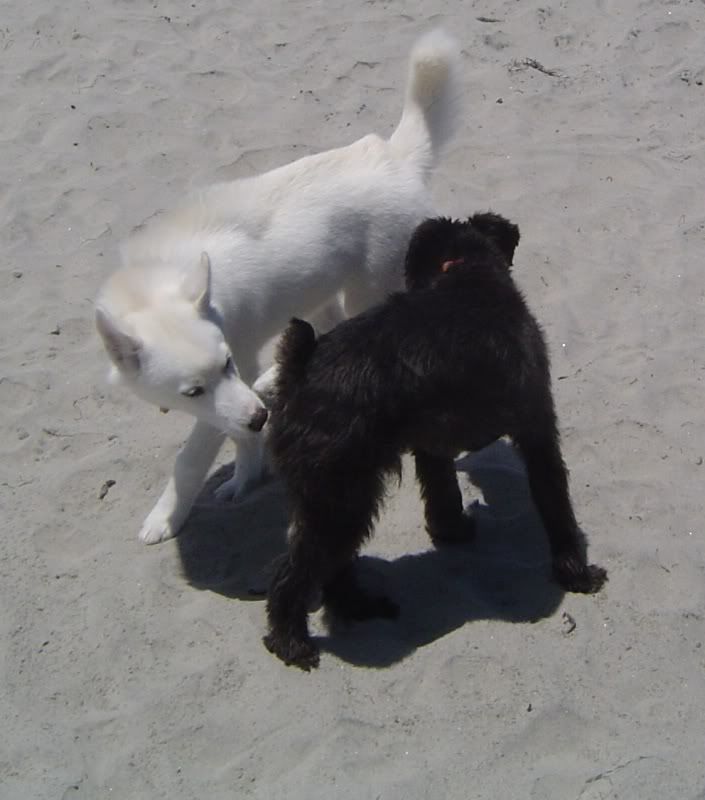
White dog submitting to the black dog, the black dog has a very stiff and dominant  posture.
woofandwordpress.com

If your dog is one trying to play with a submissive dog stay near and keep a close eye. Make sure your dog is pausing if the submissive dog yelps. It is ok for your dog to try to initiate play by nuzzling, mouthing, jumping, and wrestling, but if the submissive dog is very overwhelmed you should consider distracting your dog and luring it away to give the submissive dog a break. It is very polite of you to approach the owner of the submissive dog and tell the owner you will have your dog back off if they want. Some owners are not comfortable having dogs wrestle theirs in such a submissive state. If you need your dog to stop, approach calmly (do not chase or run up to the dogs) and gently lure your dog away. Luring is best, but if you need to lead them gently by the collar or scruff that's ok. If the submissive dog shows interest in yours while you are trying to walk away, stop. Let the submissive dog smell yours. At this point it will likely be impossible to keep them separated because they are showing interest in each other and likely want to play with each other. You may wish to tell the other owner that their dog seems to want to play and ask if it's ok to let them play again. Do your best to keep your dog distracted and to let the submissive dog get plenty of "breaks" in the play so it does not become overwhelmed or afraid.

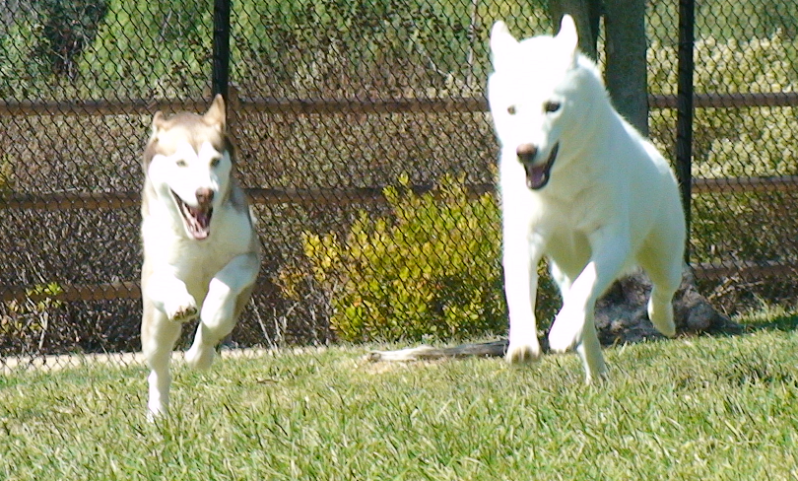
These 3 huskies, including my two,  are "teaming up" on the yellow lab who was spending the majority of the time on her back in a submissive position. Every couple minutes or when the play got rough I would step in to block the huskies and allow the lab puppy to have a break. The lab kept coming back for more and was having a great time! Some dogs prefer to play on their backs.
If a dog shows submission to another dog at any time, it's fine. It does not mean the dog is "weak" or needs to "toughen up." It is social behavior and you should not try to correct it or change it. If your dog is always submissive, it's fine. If your dog dominates and stands over other dogs or sits on them, that's also fine and is also social behavior. The only "dominant" behavior I stop is mounting because often the dog being mounted is not happy about it and I have seen a few fights start due to mounting. In my opinion mounting and humping is not a dominant behavior, it is caused either by hormones or excitement or a combination of the two, but regardless, many dogs do not like to be mounted and I'm not taking a chance on which dogs will tolerate it. I do allow other dogs to try to mount my two girls because mine do not tolerate it. They spin away and give a little growl and air-bite to tell the mounting dog in a dog-appropriate fashion they do not want to be mounted. Many males at the park hump less now because the girls are such great teachers! Personally I often allow dogs to mount each other if both dogs are accepting of it and at least one of them is fixed, and if both owners are ok with it as well. It's dogs being dogs. Kaytu humps boy dogs sometimes and I have no problem with it as long as I know the boy dog.

5. The Welcoming Committee
Once you are in the park you should try to keep your dog from being part of the "welcoming committee" that gathers at the gate when a new dog arrives. It is for your dog's own safety as well as that of the new dog. As I said, most fights I've seen have been at the gate where dogs are barging in and then feeling instantly overwhelmed. Most often I will not call my dogs away unless there are more than 4 dogs at the gate including mine. Having a couple dogs as a welcoming committee is almost always ok but keep a close eye. I will always call them away if the dog entering the park is dragging their owner up and is out of control as that dog is already in an obsessive and neurotic state of mind and I don't want that being redirected onto my dogs and starting a fight. Once the dog has entered the park I will wait a moment for it to gather itself before releasing mine. Let go of your dog if another dog is approaching so that they can greet each other politely as dogs, and not feel trapped. When my dogs go to the gate I calmly back them up and put them in a Sit-Stay until the other dog has entered. 

6. Puppies
Very young puppies under 4 months old should not be brought to dog parks. They are not physically capable of moving around quickly enough and being able to play and keep up with the grown dogs. They are very likely to get hurt. Dog parks are also considered by many to be breeding grounds for disease. It is impossible to know what diseases the other dogs are bringing into the park and puppies are more susceptible. There could be parvo, distemper, or any number of diseases that are passed through feces or saliva. Most dog parks do not allow dogs under 4 months and personally I feel that is an appropriate rule. Puppies are better suited for walks around your neighborhood, puppy classes, or playing with small groups of other puppies.

7. Children
Some children do fine in dog parks and others don't. In general I'd have to say I don't recommend bringing children because of the risks but many children do just fine. Parents need to realize that it is a dog park and that dogs should take priority over children (though keeping everyone safe is absolutely the #1 priority). If the parent chooses to bring their child into the park they are accepting that risk. Children are really fun for most dogs and I have rarely seen problems, but children often don't realize their actions draw attention from the dogs. One thing parents must enforce is do not let your child run around, especially with toys in their hands. Children's hands are the perfect height for dogs to try to grab the toy and they may end up biting your child or knocking your child down in attempt to get the toy. Stay near to your child at all times and keep in mind that if you pick your child up the dogs may see it as an invitation to jump on you, follow you, and try to get the big fun toy in your hand that smells like Cheerios or fish sticks. Same as when dogs are picked up, the child becomes a target and a toy for the dogs. Dogs will jump up on the parent or try to grab at the child's feet, legs, or bum. Before coming into a dog park parents should explain to children how to greet dogs, to ask people before petting their dogs, and what to do if a dog barks at them. Also make sure your kids do not have food all over themselves. This will draw dogs in like a magnet and they'll be licking and slobbering all over your child and won't leave your child alone.

No babies. I personally don't think it's a good idea to bring a baby into a dog park. If you do bring a baby I suggest the baby stays in a stroller where the dogs can't get their noses over the top of it. I strongly advise against front/back carriers or just holding the baby as once again this makes the baby a target and a toy. Babies smell awesome to dogs and it is usually very difficult to keep the dogs away. Babies are also more susceptible to any diseases at the park and dogs can transmit many things to babies. For example a dog who recently had a Bordetella vaccine may give a baby whooping cough. I have seen several infants in strollers who are fine in the dog park, but they have parents who stay close and body block any dogs that try to come near.


8. Playing or Fighting?
For most owners their worst nightmare at the park is a fight. Sometimes play can get very rough and it's tough to tell if the dogs are still playing or if it's turned into a fight. It is important to remember that noise does not mean aggression or fighting. Many dogs bark, growl, snarl, groan, whine, and yip while playing. It can get very noisy and sound awful but still be play. It is also important to know that bared teeth does not mean aggression, and biting or mouthing does not mean aggression. Raised fur does not mean aggression. Denali's fur always goes up when she is playing. You must take the dog's entire body language into account. Dogs play using their mouth and bodies. You know a fight when you hear and see one. If you can't quite tell, it's most likely playing because the sounds and look of a fight is unmistakable. Think about this: Is one dog trying to hurt the other dog? Often in a true fight one dog is doing the attacking while the other is defending itself. For me, the easiest way to tell is to just look at the dogs' bodies. Are they loose and wiggling, giving play bows and other play positions? Or are they stiff, tails stiff and straight out or straight up, chests out, keeping face-to face, legs stiff, snapping at each other, and fighting? Here are some images of common things you'll see in playing.


Standing up, jumping on each other, and mouthing
dog-breeds-spot.com

Stalking other dogs


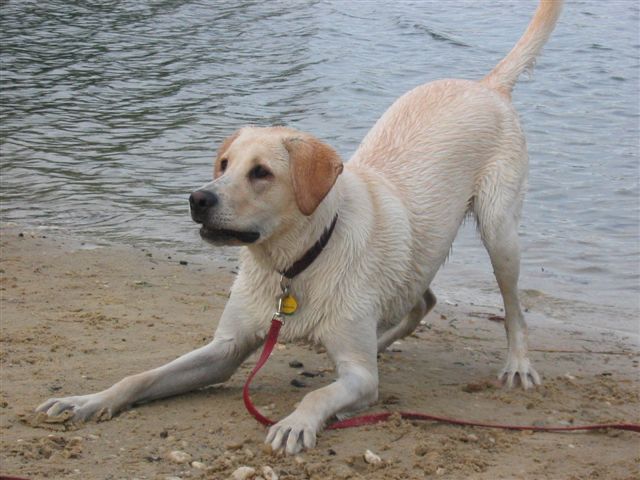
Play bow! The invitation to play.
ask.metafilter.com
Mouthing each others necks, ears, or face. Sometimes the dog won't let go for
several seconds and may chew gently.
hemlockhollowdogtraining.blogspot.com

Now for aggression. I had a hard time finding good images of true aggression and aggressive postures. Bared teeth is very common but keep in mind some dogs may have closed mouths and not be showing teeth or wrinkling their noses at all. Their mouth will still be tight though.
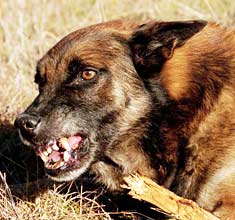
Notice the ears are flat back and the expression is much more intense and tight than the previous images.
The corners of the mouth are forward. The dog is staring, eyes fixed on the target.
doggies.com
Aggressive body language. Note how the posture is very forward, upright, and stiff.
The tail may be more vertical or closer to horizontal depending on the dog, and may even wag stiffly.
This is the same posture you see with dogs who are aggressive on leash when another dog gets too close- they freeze in this position (maybe not with raised hair or curled lips) and stare down their target before lunging.
moderndogmagazine.com

9. Dealing With an Aggressive Dog
If a fight does occur, hopefully both owners are nearby and ready to stop the fight. If your dog is not involved keep your dog from approaching the fight if at all possible. The commotion is likely to draw your dog in. If your dog is involved, act as fast as you possibly can. To break up a fight one of the best ways is to use a dog repellent spray. Most people do not habitually carry dog repellent and have no tools to use but their own bodies. Do not try to grab the dogs by the collars or neck. Do not try to step between the dogs. Do not put your hands or arms anywhere near the dogs' heads. Do not hit, kick, or slap the dogs, including hitting either dog with a leash. Striking the dogs will provoke them. Usually it is one dog attacking the other and the other is trying to defend itself and get away. Grabbing the attacking dog by the back legs and lifting the dog upward is considered one of the safest ways to stop a fight. This may be impossible if the dogs are small or moving too quickly. I have done this a couple times and it IMMEDIATELY causes the dog to focus on you instead of the other dog. A dog's spine is pretty flexible so if you do grab the back legs, be prepared to instantly let go if the dog's head spins back toward you in attempt to bite you. Generally, grabbing any part of the dog and shoving it backward will work and will give you a chance to further restrain the dogs. Denali has been in a couple fights and always been the defending dog. She did a play bow in front of a dog twice her size and the dog instantly attacked her. I broke it up by grabbing Denali by the skin of her back and shoving her backward since it was all I could grab. Even though she was the defendant it still worked. Both owners should be trying to break the dogs up. If your dog is not involved in the fight, your job is to keep your dog out of it and keep yourself and your dog safe. Do not shout, scream, or yell at the dogs. Ultimately I believe in doing whatever necessary to prevent the dogs from injuring each other or locking their jaws down on each other. If you need to use your foot to shove a dog away, do it. Don't kick, but a push with your foot to shove a dog back may needed to get space between them. Her second fight, s
he was seemingly randomly attacked by a dog as she was walking past it. I grabbed her around the hips and shoved her back behind me and used my foot to push the other dog away.

If your dog was in the fight, after the fight is broken up lead your dog away from the other. Calmly check your dog all over for any bleeding, especially in their mouth on their gums and tongue, their face, ears inside and out, neck, chest, and front legs. Check their armpits and groin too, and feet. Do not make a big deal of it to your dog. You want the dog to move on, not think that the fight was a huge deal. You can create more serious issues by making a big deal of it. It is a big deal for your dog to be in a fight but the dog doesn't need you to baby it or create an even bigger scene. It's not helpful for the dog. Ask the other owner if their dog is ok. Take the dogs to the nearest vet if necessary, and exchange information with the other owner if necessary. If either dog is bleeding at all, you should exchange information to get vet records for proof of vaccinations. If the fight was very serious you may need to contact animal control or the police to do a formal report. If both dogs are fine, I highly suggest the defending dog not leave the park immediately. You want to end on a good note. Once your dog is calm, I suggest running around and playing more for at least a couple minutes before leaving. If you need to, leave the park itself and go for a quick walk around the area. Staying in the park is not always possible, and if your dog is still worked up it is best to leave to prevent further fights. Leaving right after a fight is not a positive experience, however it is sometimes necessary. You should of course leave immediately if veterinary care is required. If your dog was not involved, again you should provide at least a couple minutes of normal fun playtime before leaving unless the fight got your dog worked up, in which case I suggest leaving and going for a short walk.


A dog will not get along perfectly with every single other dog they meet. Think of it like this: No matter how nice of a person you are and how well you get along with most people, there will always be people who you don't like or don't get along with for whatever reason. To me, the same holds true in a dog's world. Do not let a fight discourage you from going back to the park. If your dog was the instigator you may want to seek the advice of a professional trainer to determine if your dog is showing signs of escalating dog aggression or if it was just one of those days when your dog met a dog that it didn't get along with for whatever reason. Keep your eyes open to recognize that dog in the future to avoid another conflict. Do not return to the park if you feel another fight is likely to be caused by your dog, and seek the help of a professional trainer.

If you know that your dog is aggressive toward other dogs do not bring it into the dog park when other dogs are there. You need to work with your dog outside of the dog park and will likely benefit from the knowledge and advice of a professional trainer. I have no problem with aggressive dogs being in dog parks when no other dogs are present. I think it's great for all dogs to get time off leash. If you are there by yourself with your aggressive dog watch for people to be approaching the park and be ready to stop them from coming in so that you can leave first. Stay close enough to the gate that you can stop people and tell them that your dog doesn't get along with other dogs, and to please wait so you can get your dog and you'll leave. It is your responsibility to keep others safe. If you can't do that, do not take your dog to the park. Working with an aggressive dog to overcome their dog aggression is very serious and you should be extremely cautious and work with an experienced trainer. You should NOT simply muzzle an aggressive dog and let it try to play at the park. The dog should not be brought into the park until it has shown it can be around many dogs and not react inappropriately. I cannot stress enough that dealing with aggression is very serious and it is easy to make the issue worse without using proper methods to slowly and gradually work up to the point of bringing your dog to a dog park to play with other dogs. Some dogs may never reach that point. Do not rush it, and do seek the help of a professional.

I want to remind you that the vast majority of the time you will not be experiencing fights or anything bad at all. Dog parks are fun places that give your dog a chance to socialize and play! Continue reading Part 2.


August 7, 2012

Feeding Raw on Vacation

Going on vacation takes some preparation with raw fed pets, whether they are coming with you or staying. With our two dogs and two cats all completely raw fed now it can be a little daunting. It's all about thinking ahead.

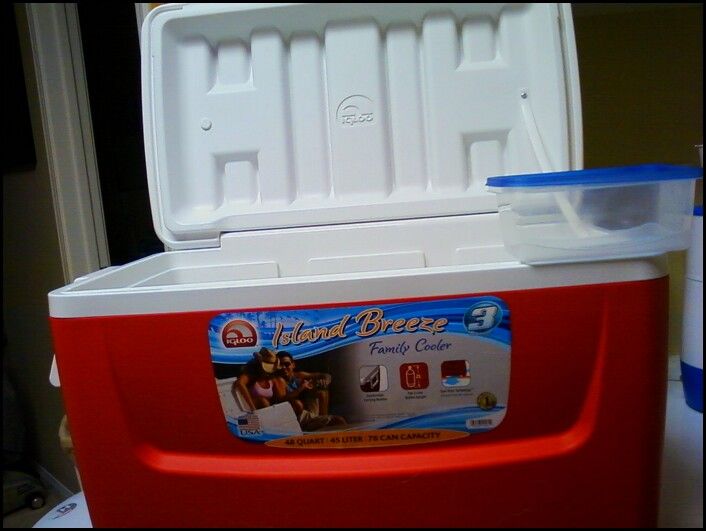
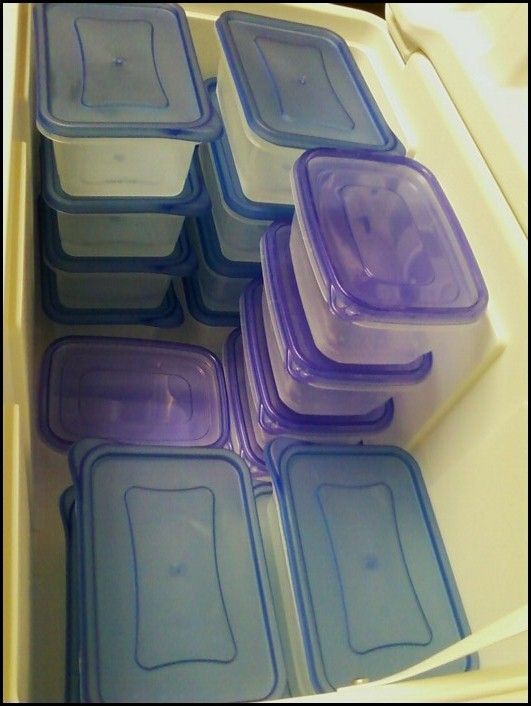
Our dogs have always come with us on vacation. A while back I got a big 48 quart cooler. Several days before our vacation I experimented with empty tupperwares to figure out the way they fit best. I also wanted to know how many meals I would be able to bring with me. I suggest using a plastic cooler. Fully loaded my cooler can easily weigh 30-40 lbs with all the meat and ice packs. I'm not sure how much those styrofoam coolers can handle but I'm not taking any chances. I can fit 24 tupperwares in my cooler which is 12 days of food for my dogs. Some of the bigger tupperwares I can even fit 2 meals in one container upping the meal count to about 40. That's almost 3 weeks worth of food, and then I can add chicken leg quarters too. I can fit enough food in one cooler to last a month or more for my dogs. If I leave out a few tupperwares I can fit bigger chunks of meat too. If I used only ziplock baggies I could fit much, much more however I hate wasting the baggies and I don't think I would ever need to bring that much meat anyway.

Think hard about how much meat you actually need to bring, and how much you can bring. If you're going to visit friends or relatives it's good to call ahead and explain that you may need some freezer space for pet food. I've made the mistake of not calling ahead and ended up having more meat than fit in the freezer. Fortunately there was room in the fridge and I didn't have too much extra. Really think about how much you need to bring. Are you going somewhere that you will be able to buy more meat? What will you be able to buy? What will you need to bring? For example it's tough for me to find beef hearts where my inlaws live, but it's easy to find whole chickens or chicken leg quarters so I'd rather put beef heart in the cooler and buy leg quarters there. It's also not a big deal if the dogs don't get beef heart for a couple weeks. They'd do fine eating leg quarters and pork roast or whatever I could find in that town. However, I like bringing as much meat as I will need to last for the vacation. It can be annoying to have to run to the grocery store, butcher meat, and package it while on vacation. I like having it all done and ready to go. As long as there is enough freezer space I will bring enough meat to last the entire vacation plus a couple extra. I bring extra because sometimes the dogs will have a very busy day hiking or swimming and I'll want to give them extra food.

I also take time (months in advance) to ask my friends who hunt if they can keep some parts for me. I have the cooler with me so it's the perfect way to get free meat!

There are some basics of loading a cooler that help keep the meat frozen. First, air is warmer than frozen meat. It's an obvious statement but means a lot here. It means that the more air there is, the warmer the cooler will be; and the more frozen meat or ice there is, the colder it will be. To keep the meat frozen you need to fill as much space as possible. Meat in tupperware will defrost faster than bigger pieces because of all the air in the tupperware. Meat that is frozen solid will actually stay frozen a very long time especially if it is surrounded by other frozen things. If you are going to be traveling for one day and have a freezer available at your destination you can get away with using tupperware in the cooler no problem. There is no reason to worry about the meat defrosting, let alone rotting. More than one day, just makes sure everything stays frozen. Using tupperware is ok but using bigger pieces of meat will help ensure the meat stays frozen. As long as you can keep the meat mostly frozen it will be fine. Our trip from San Diego to my in-laws' house is about 920 miles and takes 14-15 hours. We push through and do it in one day. I load the cooler in the morning right before we leave and when we arrive in Colorado everything is still at least semi-frozen, with things in the middle still completely frozen.

Ice is very important. I use cold packs to slide between the stacks or put on top of the stacks. If I know I am going to have a lot of extra room in the cooler then I fill empty 2 liter soda bottles with water and freeze them. Filling the warm air space with something frozen helps keep the temperature down in the entire cooler. I try to stay away from using bags of ice as they always leak, make a mess, and are not reusable.

Do not load any tupperware sideways and make sure the cooler stays upright. If they start to defrost you could have leakage. Speaking from experience it's not fun to have to clean every single other tupperware, baggie, ice pack, and the cooler itself because one stupid tupperware leaked. Again from experience, anything not in tupperware or ziplock should be wrapped in a plastic grocery bag or put into a ziplock, such as meat wrapped in butcher paper or tubes of ground meat . These always leak if they start to defrost so double bag them.

Finally, don't forget to bring a tarp or mat or whatever your pets eat on. Bring cleaning supplies like a small spray bottle of vinegar too.

Our vacation to Colorado last Christmas was a little more simple as the cats were still being fed kibble and all pets came with us. Our trip this summer was a little more challenging as we decided to leave the cats here and only take the dogs- and the cats are eating raw now. We have wonderful friends who were willing to feed the cats raw. I apologized and thanked them profusely for dealing with the grossness and yuck factor. I wanted to make it as simple and least gross for them as possible.

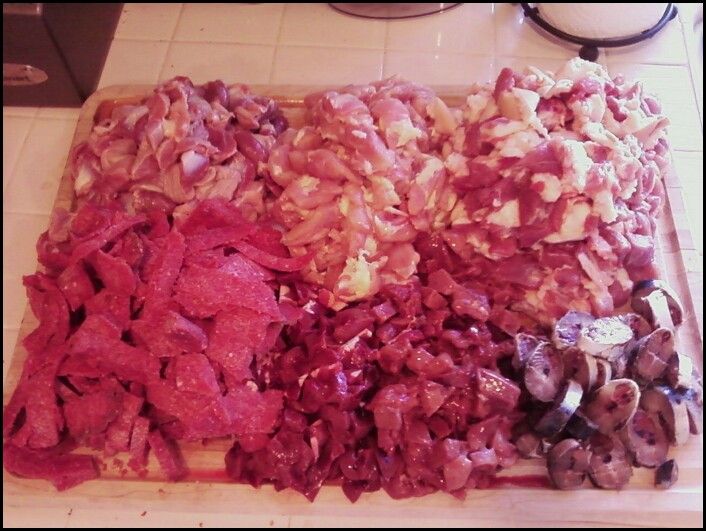
I decided a mixed up kitty buffet would be easiest for our friends. I got several kinds of meat and organ to use. My original plan was to use the food processor to chop it up really well so it was basically mush. I decided it wasn't worth the time and my gag reflex might not have been able to handle that anyway. I cut everything into chunks and left it at that.

Top row, left to right: Chicken hearts & gizzards, chicken thigh filet, pork shoulder roast
Bottom row, left to right: Moose (it was ground and frozen, I shaved "slices" off as it defrosted), beef kidney, beef liver, and slices of sardines. The dogs ate the heads and tails of the fish.

For bone content I would have liked to have Everest eat a mouse each week and for Zeb to have a chicken wing but I don't think it's reasonable to ask friends or family to give the more "extreme" and intense whole foods like that unless you know for sure they would be ok with it. The cats were with our friends for only 2 weeks and they did get some bone with the sardines. 2 weeks of less bone was not a big deal.

I put it all in a huge salad bowl and mixed it together, then scooped it into tupperware. Mixing it was disgusting, cold, and slimy, but ultimately I felt it was the best way to save our friends from having to do too much. Their willingness to feed raw was enough already! I combined everything the cats needed so all our friends had to do was scoop some out of the tupperware. All tupperwares had the same thing so there was no need to worry about what to feed each meal. Just scoop some out and done.

I also provided a piece of tarp and a box of plastic spoons for them. Raw is gross and I know this. I didn't want to expect them to use their own dishes with it. They chose to use their own plates and utensils anyway.


If you need to board your pets you must call ahead to find out their policy on raw food. Some boarding facilities will not allow raw food. They also might not have the freezer space for raw depending on how long the pets need to stay.


Camping with raw fed pets is another topic entirely, to be covered another day.

August 2, 2012

Fish Oil

The one supplement recommended for almost all raw fed dogs is fish oil.  Reason being is that meat in the grocery store is much lower in Omega 3 fatty acids than naturally raised meat would be. Feeding raw fish is not a good enough substitute to make up for lost Omega 3s though it does help. A dog fortunate enough to eat wild, non-farmed game such as venison, elk, moose, pheasant, and rabbit wouldn't need fish oil.

Omega 3s and 6s are very important so I want to briefly get into the science of it and talk about why adding fish oil is a good idea. This information is all based on human studies.

Fish oil contains both docosahexaenoic acid (DHA) and eicosapentaenoic acid (EPA). According to Mercola, "These two fatty acids are pivotal in preventing heart disease, cancer, and many other diseases. Your brain is also highly dependent on DHA -- low DHA levels have been linked to depression, schizophrenia, memory loss, and a higher risk of developing Alzheimer's." According to the Mayo clinic, "There is evidence from multiple studies supporting intake of recommended amounts of DHA and EPA in the form of dietary fish or fish oil supplements lowers triglycerides, reduces the risk of death, heart attack, dangerous abnormal heart rhythms, and strokes in people with known cardiovascular disease, slows the buildup of atherosclerotic plaques ("hardening of the arteries"), and lowers blood pressure slightly. However, high doses may have harmful effects, such as an increased risk of bleeding."

There should be balance between Omega 3s and 6s with a 1:1 ratio. Store bought meat is high in 6s but low in 3s. Also stated on the Mercola site, "[the] University of Michigan researchers also agreed that including more omega-3 than omega-6 in your diet may help protect your tissues and organs from inflammation, one of the underlying causes of countless chronic diseases and aging."

Choosing a fish oil: For dogs you want to give fish oil, not cod liver oil. Go to a pharmacy such as Walgreens or CVS. Buying pet specific supplements from a pet store or anywhere else is often not a good idea for a couple reasons. Pet supplements are usually not regulated, and certainly not to the point that human grade supplements are. Pet specific supplements can also get away with not listing every ingredient. They can therefore add ingredients that are pointless at best and harmful at worst like flavorings.

Go to the store and start looking at bottles. Look at the ingredients listed on the back. There should only be fish oil, gelatin, and glycerin. The gelatin and glycerin are the shell of the capsule. There should be no Vitamin E, which is soy; no mixed tocopherols, which is soy; and no rosemary extract, citrus flavoring, or anything else. With salmon oil you may need to proceed with caution. Do some research on farmed salmon. If you can't find any fish oil that doesn't have mixed tocopherols or Vitamin E and you don't want to order any, then I say it's fine to use it. There is very little soy in a gelcap and I think the benefits outweigh the "rule breaking" of giving the dog soy. It's definitely best to avoid it if you can though.


Here are a couple examples of what to look for on the bottle.
[Note: I'm not specifically promoting these brands, these are simply two examples of fish oils that are good to use and I will be using them as references for how to read the labels. Click to enlarge.]
Ingredients are only fish oil, gelatin, and glycerin. It also specifies which fish are used.


Dosage: Look on the BACK of the bottle for the EPA and DHA information. Do not rely on what the front of the bottle says. The maintenance dose to bring Omega 3s and 6s back into balance is to give 100mg DHA+EPA per 10lb. For example, a 100 lb dog would need 1000mg, and a 15 lb dog would need 150mg.

On the first bottle look about 2/3 of the way down the label where it says "Fish Body Oil Concentrate." One serving size is 1760mg which is what the front of the bottle says. The next line down says 870mg of Omega 3s. That's why you need to look at the back of the bottle for the numbers, not the front! Then look at the top of the label- Serving size is 2 softgels. That means each gel is 435mg of Omega 3s. More typical is what is shown on the label of the second bottle, with each gel containing 300mg of Omega 3s.

A 300mg gel would be the perfect daily dosage for a 30 lb dog, or two per day for a 60 lb dog, or 3 for a 90 lb dog. What if your dog is in the middle like mine are? Both my huskies weigh about 40 lbs. They would need 400mg per day. If I give them one gel per day they would end up short by 700mg for the week. So I give them an extra gel twice a week to make up the difference. It does not have to be an exact or perfect dosage.

Feeding Fish

In a raw diet feeding raw fish is not necessary, but the right fish offer good variety and can be beneficial. Fish is not a main part of a wild canid's diet (or of cats, despite what cartoons would have you believe) so ideally it shouldn't be a main part of your dog's diet but it's fine to feed often. It's ok to never feed fish, and it's ok to add fish every day. One reason I like to add fish is because it's possible to feed the complete, whole animal including the organs that are tough to get in a regular grocery store separately.

The best fish to feed are oily ones like mackerel, sardines, herring, anchovies, and smelt. This is because they offer Omega 3s; scroll down to the bit about fish oil for more info. Wild-caught salmon is also good but farm-raised salmon is high in mercury (more on that below too) and also high in other toxic chemicals. I would personally steer clear of all farm-raised salmon. Other than salmon, to my knowledge, any farm-raised store-bought fish is fine to feed and there is no need to worry about parasites or anything else. If you aren't sure if the fish was wild or farmed then freeze it for a couple weeks just to be safe. Non-oily fish like tilapia is pointless to feed unless you're desperate for variety. If you're looking to add fish, skip the tilapia.

If you do choose for some reason to give tilapia it may be wise to cut off any spiky fins. With sardines, mackerel, etc. you don't need to cut anything off. The fish should be fed whole. Head to tail, skin and scales, guts included. Removing the head or guts is removing nutrition.  

Make sure the fish is raw. Do not buy cooked, canned, smoked, breaded, or seasoned fish. Whole fish are best and I personally wouldn't bother feeding any kind of filet or gutted/headless fish.

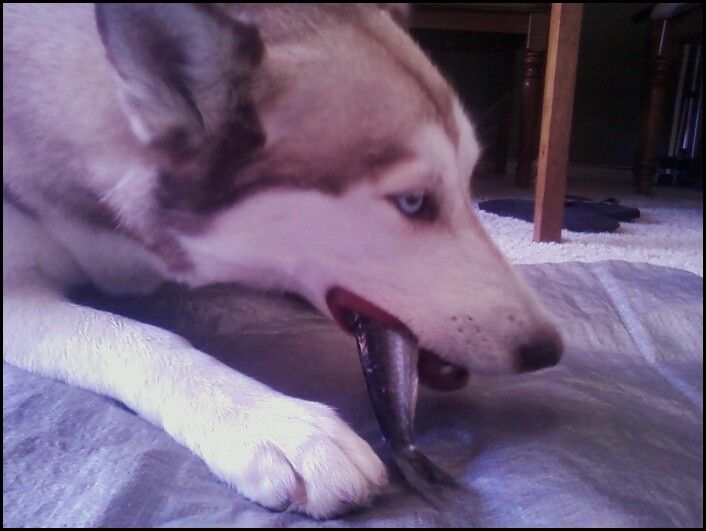
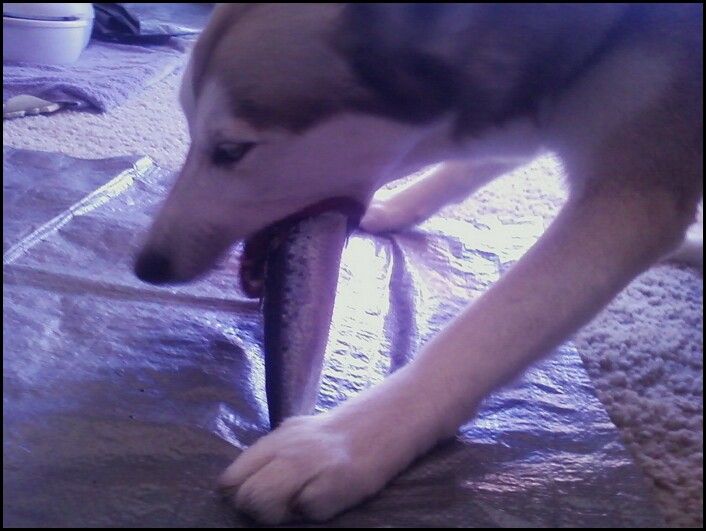
Some dogs don't like fish very much or seem puzzled when a whole fish is set in front of them. Try cutting the fish in half or making some deep slices into it at first to get the dog interested. Do this when the fish is still semi-frozen or else guts come out and it's extra smelly and disgusting. I typically feed the fish semi-frozen to keep the smell and goo at a minimum. Denali refused all fish at first and thought they were revolting. She would snort and curl her lips and shake her fur. She loves them now and I'm not sure why she changed her mind. Don't stock up your freezer until you're sure the dog will eat it.
 

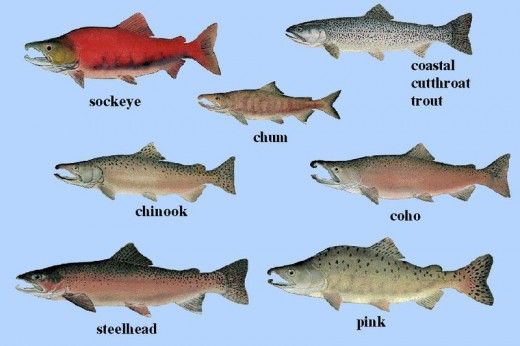
As mentioned in the Bacteria & Parasites post, most fish are fine to feed but there is specific concern with wild-caught salmonids in the Pacific Northwest of the United States. "Salmonids" includes salmon of course (see pic) but also trout, whitefish, grayling, and char. These specific fish in this specific location from southern Alaska to mid California may have the parasite responsible for salmon poisoning. Freezing the fish solid will kill the parasite. One week of freezing is surely enough, but 2 weeks is what I would personally do. If you are not comfortable feeding these specific wild-caught fish from this area due to the chance of the parasite being present then simply don't feed it. Again, fish is not a necessary part of a dog's diet and there are other good options for fish to feed anyway.


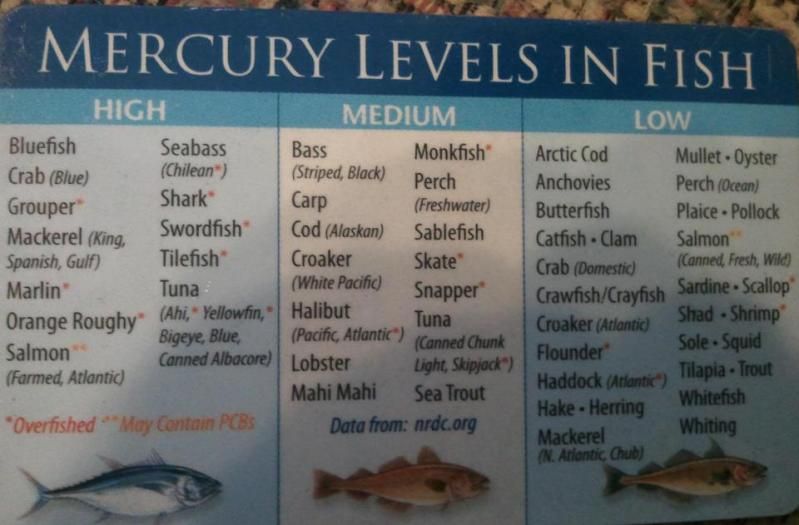
Mercury levels are also important to know. I keep this picture on hand and only buy fish in the low category. Fish in the medium category are ok to feed but don't feed them as often or in large quantities. Personally I would avoid any fish in the high category, which includes farmed and Atlantic salmon. Other sea critters like crab, crawfish, and scallops are listed here as well. These are basically in the same category with tilapia of being pointless variety for dogs. If you're going to feed anything that comes from the ocean, make it worthwhile by feeding oily fish and skip the rest.

Click to enlarge.

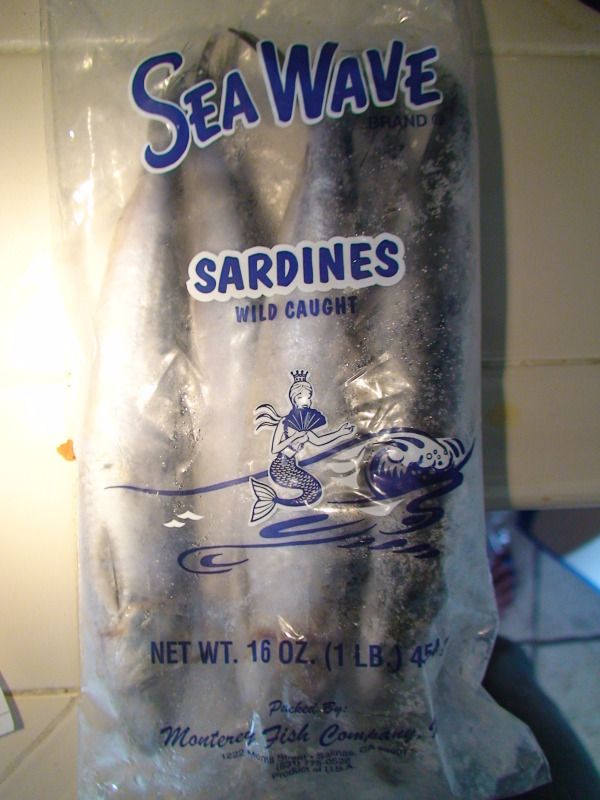
At the grocery store we shop at I can find whole frozen sardines, so that's what I get. They are $2/lb here which is about twice what I like to pay for food for the pets. I find them in the frozen food aisle. If the main grocery store doesn't have anything good then check Asian markets as they typically have a wider variety of fish. Again, stick to the oily fish! I usually give each dog one fish, once or twice a week. The price is one reason I don't give it more. If they were very cheap I might give a fish 4-5x a week or even 1/2 fish every day but I like to keep things cheap.


On a final note I want to mention that yes, fish bones are fine to feed as long as they are raw. There is no need to worry about the dog choking on them or about the bones causing harm to the dog's digestive tract. Raw fish bones are very soft and flexible and they digest easily. Cooking the bones makes them brittle. Brittle bones break into sharp pointy little shards capable of causing harm. Raw bones only! Fish is great for dentally challenged dogs or cats who may not have any teeth or have bad teeth and cannot chomp down on harder bones, or for cats who don't seem to "get" chomping and eating bones. Fish bones are often so small that cats will eat them easily. Bones are an important part of a raw diet and if a dog has trouble with bigger or harder bones then fish bones are a great option- Cornish game hens and rabbits are also great for those dogs to get bone in their diet.